
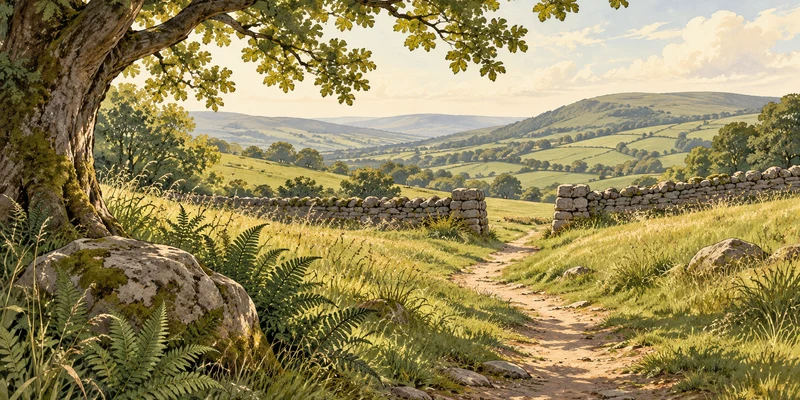
Getting outdoors
A walk can lead into the history of a landscape, the journeys of migrating birds or a hobby we hadn’t thought of trying. Explore places, wildlife and changing seasons through our articles, stories and activities, and find interests that could become part of your own life.
Read more: There is more out there
There is more out there
Near Austwick in the Yorkshire Dales, great dark boulders stand on pale limestone. The boulders are a different kind of rock from the ground beneath them. A glacier carried them from another outcrop and left them behind. The Norber erratics are evidence of a landscape once occupied by moving ice. Knowing this changes what there is to see. The hillside becomes a place with a past quite unlike its present. [O6]
We might go out simply because we fancy a walk. Then something interrupts the familiar view: an oddly shaped valley, a line of ruined buildings, a bird we cannot name. There is pleasure in the encounter itself, and sometimes a question follows us home. Why is that rock there? Who worked in those buildings? What brought that bird here?
An answer can give us a reason to return. A geological map helps us recognise the rocks beneath a route. An old photograph shows a busy railway where there is now a footpath. We begin to connect what we see with processes and lives we could not see directly. A place we thought we knew acquires another history.
A place changes through the year
On a winter estuary, a flock of knots can look like a gathering of small grey birds. These are birds of the Arctic as well as our coasts: large numbers come here outside the breeding season, and their summer plumage includes a rich brick-red breast. The birds feeding on a stretch of mud belong to a much larger geographical story. [O7]
That story gives a coastal visit something to grow into. Where have the birds come from? What do they find in the mud? Why does the same shore seem crowded on one visit and almost empty on another? Learning about tides and migration changes when we choose to go and what we expect to find. A local bird group, a field guide or somebody watching through a telescope may help us get further than we would alone.
There are other ways to follow a season. A painter might return to the same headland to work on the changing light. Someone interested in trees might become curious about why flowering times differ, and how those changes fit the lives of insects. We do not have to collect an impressive number of species or travel a great distance. An interest can become absorbing because we know one place well enough to recognise a change.
An interest gives us somewhere to go
Photography offers a particularly good reason to revisit a place. At first we may want to bring home a picture of a view. Later, we might want to understand why the photograph feels flat when the place did not. We begin making choices about position, light and what to leave out. A familiar bridge becomes a subject worth trying in fog; a harbour we once passed through becomes somewhere to spend an afternoon.
As the interest develops, there is more to learn than how to operate a camera. We may look at other photographers’ work, ask about a building’s history or meet people who know the coast in different weather. A phone camera can be enough to begin. The interest may eventually justify equipment or a course, but the first useful question is often about the picture we are trying to make.
Metal detecting can open a different route into a landscape. A buckle or button may raise questions about clothing, work and the people who used a field before us. Identification and the circumstances of a find matter if it is to contribute to knowledge of the past. In England and Wales, the Portable Antiquities Scheme helps record archaeological objects found by the public. With landowner permission and an appropriate place to search, the hobby can lead beyond finding objects into local history and conversations with people who can help interpret them. [O8]
For someone else, the attraction may be finding a route. Orienteering adds decisions to a walk: which path to take, how a slope on the map relates to the ground, whether a longer route will be easier to follow. There is satisfaction in becoming more capable at this, and in comparing choices afterwards. Our guest introduction from British Orienteering explains what happens at a first event and how beginners can get help.
Outdoor interests also find their way indoors. A shape noticed on a walk might become the starting point for a wood carving. Sketches made beside a river might become a painting. Reading, making and going out begin to feed one another, with each giving the next outing a different purpose.
What being outside can offer
There is research behind some familiar accounts of feeling better outdoors, although several things may be happening together. Studies have found associations between time in natural surroundings and reported wellbeing. They cannot, by themselves, tell us how much the surroundings caused the difference: people’s health, circumstances and opportunities also influence where they go. [O1]
One proposed explanation concerns attention. A natural setting may hold our interest without requiring the effort of continually concentrating on a task. Research reviewing this idea has found improvements on some attention measures, with mixed results overall. It is a useful possibility to examine, rather than a promise that every walk will leave us refreshed. [O2]
Movement has benefits of its own, whether it happens on a woodland path or a pavement. Walking and wheeling are among the everyday activities recognised in public-health guidance. [O3] Company may be part of what we enjoy, or we may value the chance to be alone. Sometimes the relief is simply that we have stepped away from work for a while. These contributions can overlap without being the same thing.
The place and the occasion matter too. A demanding route in unpleasant weather is a different experience from sitting beside water with somebody we like. There is no single outdoor activity that suits every body, budget or day. A nearby park, an accessible waterside path or a seat with a view can all be places from which an interest develops. Gardening offers another way to spend time outside and learn through repeated encounters with a place.
You might already have a pursuit you want to take further, or be looking for something you have never tried. You can read about an activity before deciding whether to try it, or follow a question about a place without planning a visit. The articles, stories and activities here are intended to help those interests develop. A subject that begins with one afternoon out may eventually occupy a bookshelf, introduce a friend or have us checking the weather for Saturday.
Explore further
Sources and further reading
- [O6] Yorkshire Dales National Park — Erratic Oddities
- [O7] RSPB — Knot
- [O8] British Museum — Treasure and the Portable Antiquities Scheme
- [O1] White and colleagues (2019) — Time in nature, health and wellbeing
- [O2] Ohly and colleagues (2016) — Attention Restoration Theory systematic review
- [O3] World Health Organization (2024) — Physical activity
- Historic England — metal detecting and Section 42 consent
- A Leaf for the StingStory
- The life of a bumblebeeArticle
- The Peak DistrictArticle
- What Really Happens the First Time You Try Orienteering?Article
- A Loveliness of LadybirdsStory
- A Breath of Fresh AirStory
- A Bow Over the RiverStory
- Is the World Getting Bigger?Comic
- Just a ThoughtShort reflection
The mind and imagination
How do we picture a place that isn’t there, learn something unfamiliar or discover an ability we haven’t used? Explore imagination, psychology and the possibilities we find when we try something new.
Deeper questions
What makes us who we are? Where do we belong, and what matters to us? Follow questions about being human, our place in nature and why there is anything here to wonder about.
- The life of a bumblebeeArticle
- Just a ThoughtShort reflection
- How Much of Yourself Have You Yet to MeetArticle
- The First “What If?”Comic
- How Many Talents Are Waiting for an Instrument?Article
- The Garden on the Back of an EnvelopeStory
- A Name for the PathComic
Browse by format
Ideas, evidence & experience
Articles
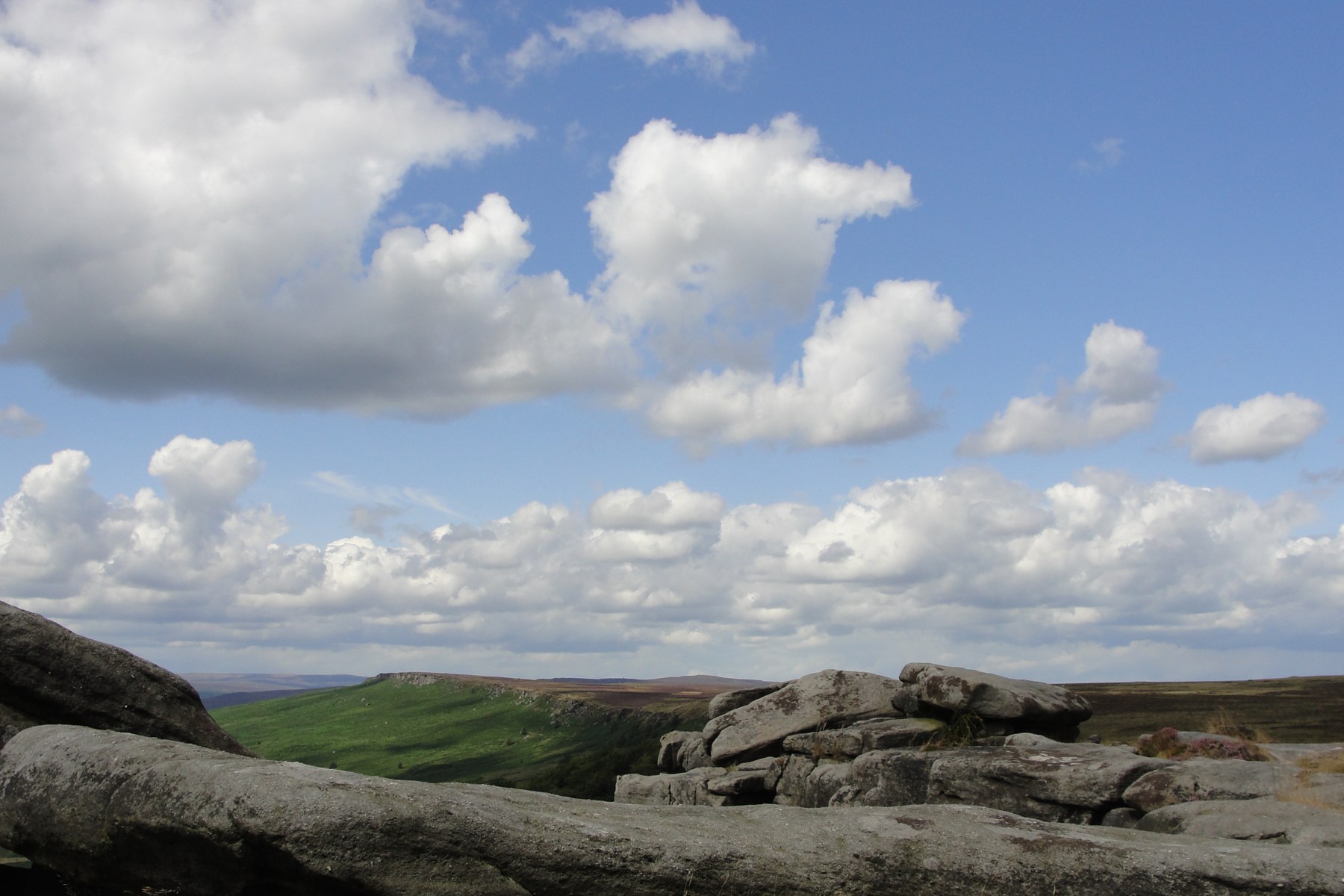
Getting outdoors · Landscape & history
The Peak District
From ancient seas to the paths we walk today: landscape, history, wildlife and places to explore.
Article · Free to read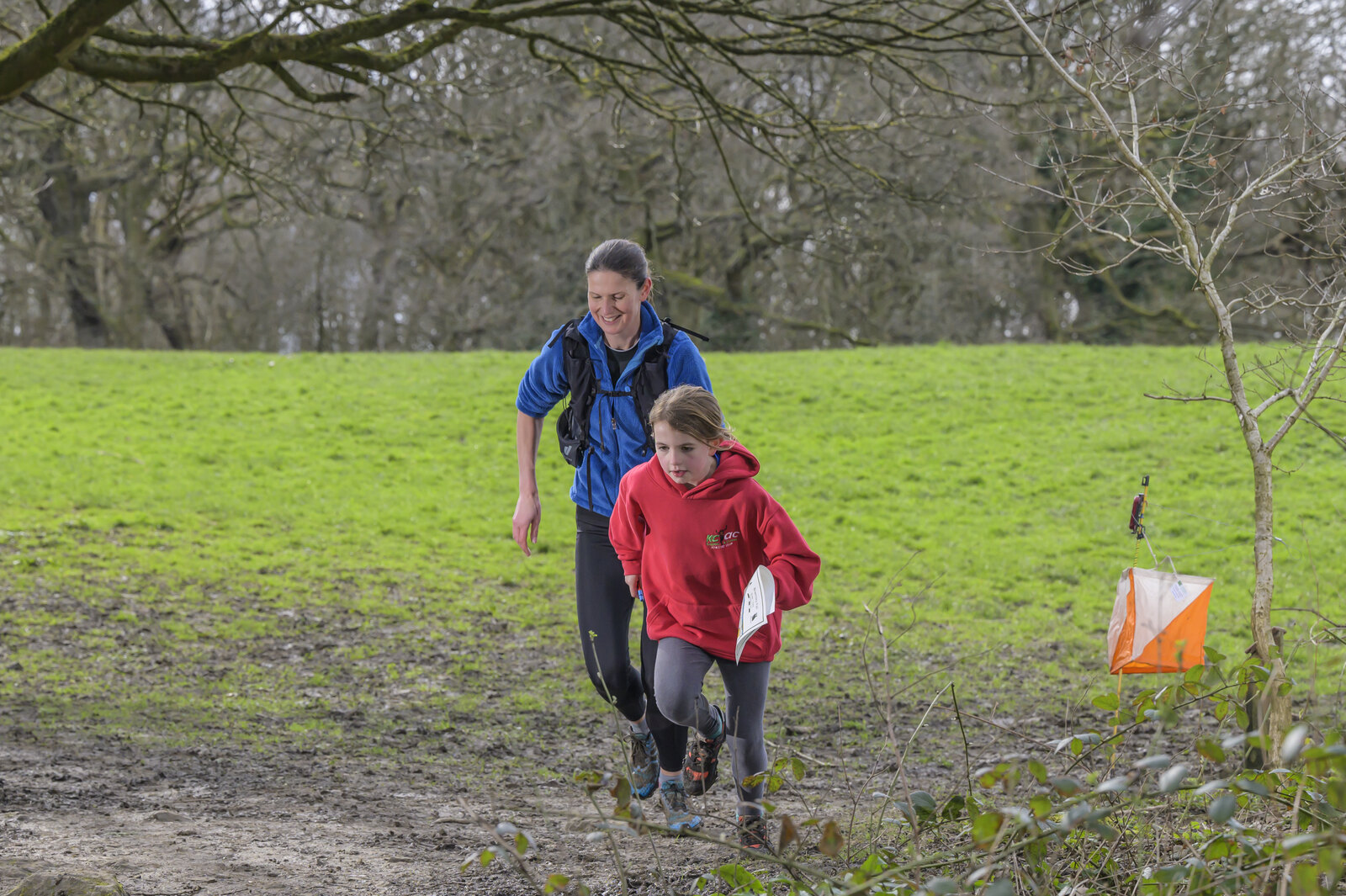
Guest article · British Orienteering
What Really Happens the First Time You Try Orienteering?
What happens at your first orienteering event? British Orienteering introduces the map, the checkpoints and the help available to beginners.
Article · Free to read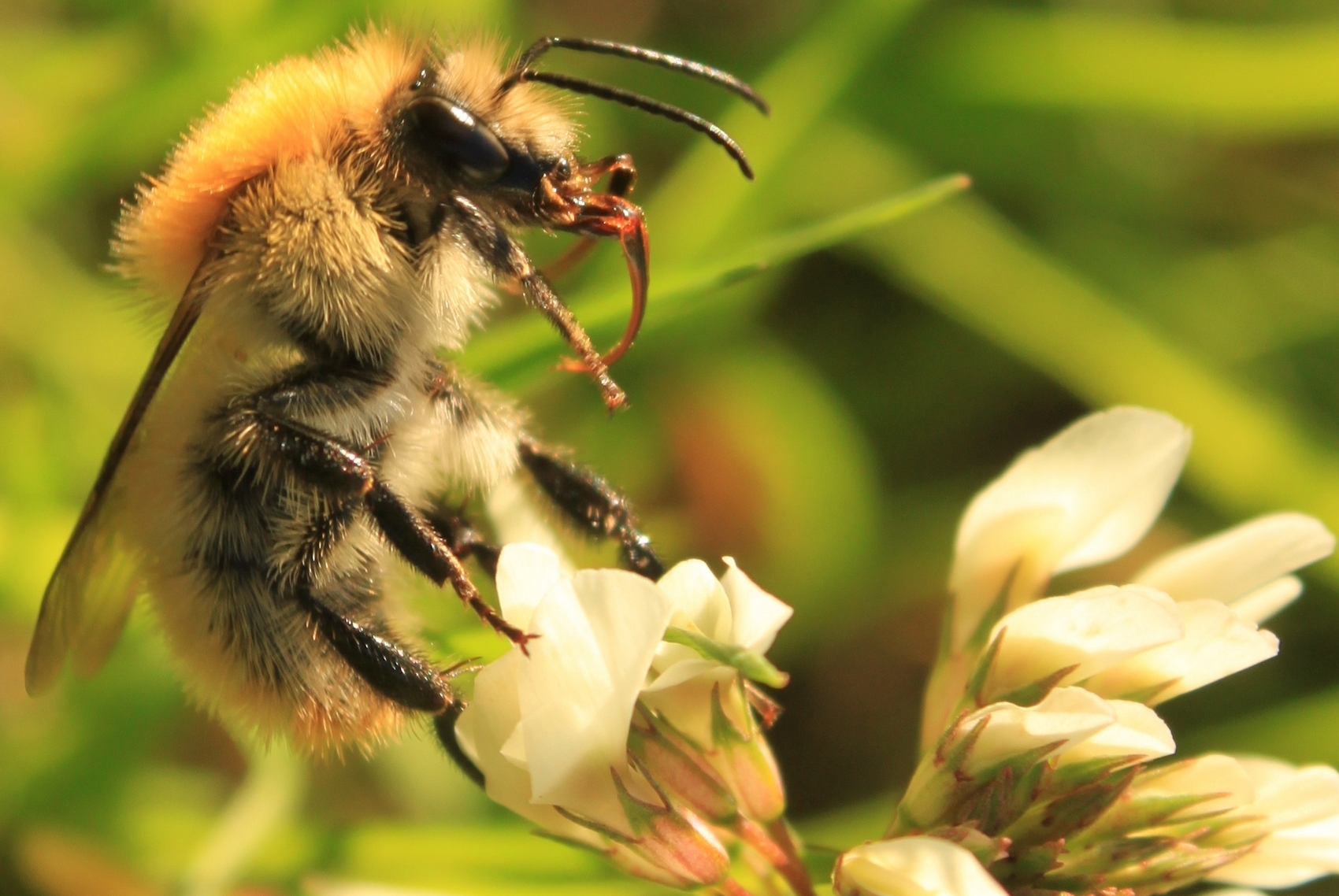
Getting outdoors · Animal awareness
The life of a bumblebee
A bee lands on a flower. What does it collect, where does it go, and does it know anything about its part in pollination? Follow its life from the flower to the colony and back.
Article · Free to read
Possibility & potential
How Many Talents Are Waiting for an Instrument?
What happens when a person discovers an ability only after the right tool, opportunity or environment finally appears? Music provides the opening question. Human specialisation makes it much larger.
Article · Free to read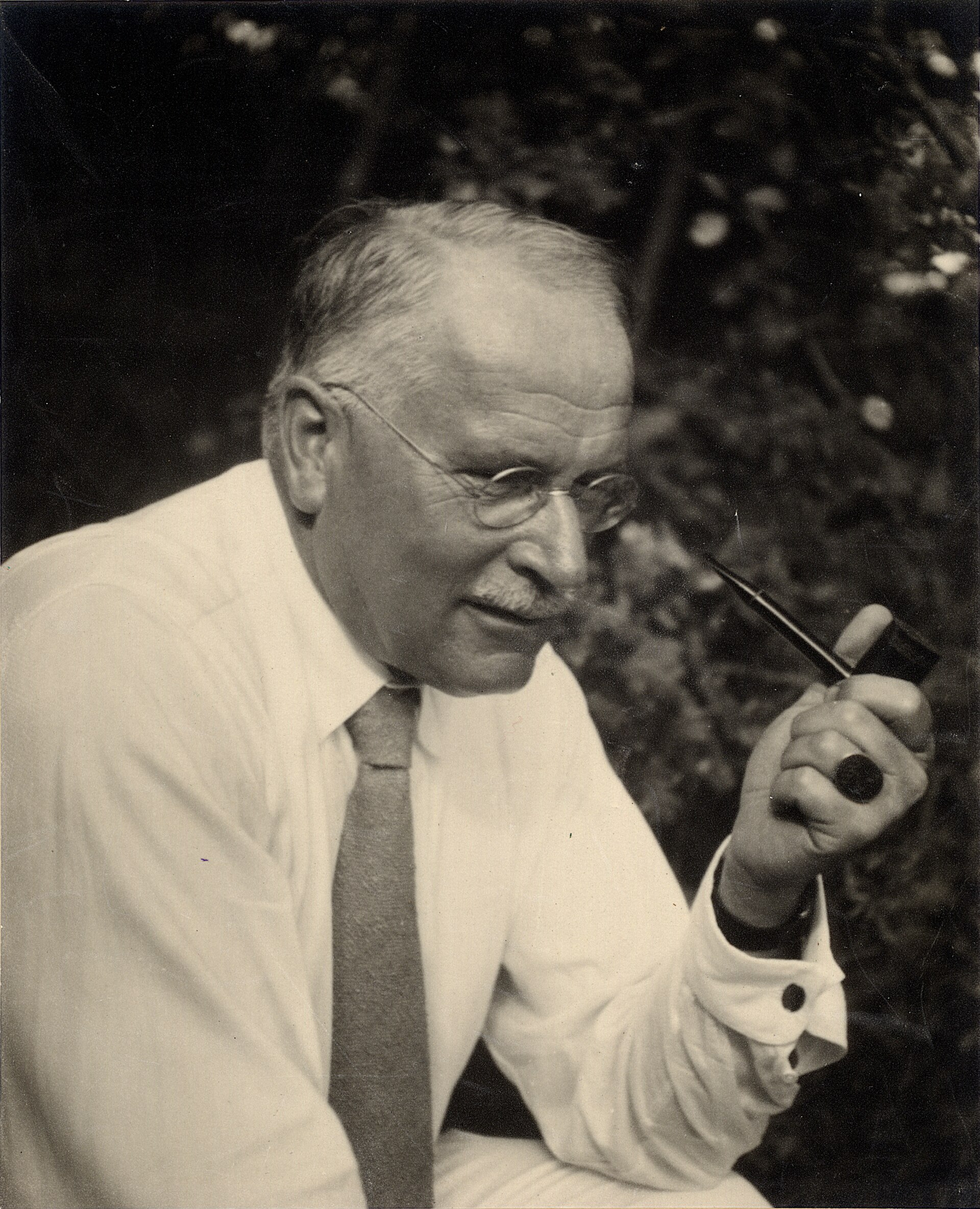
The mind & identity
How Much of Yourself Have You Yet to Meet
Carl Jung’s ideas about persona, shadow and individuation open a question about how much of ourselves we have yet to discover.
Article · Free to read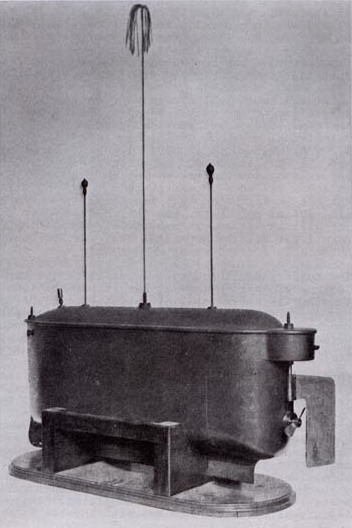
Invention & imagination
The Little Boat That Opened a Bigger World
Tesla’s radio-controlled boat opens a conversation about the machines he pictured in his mind, and what knowledge gives our imagination to work with.
Article · Free to readThe things we notice along the way
Stories & comics
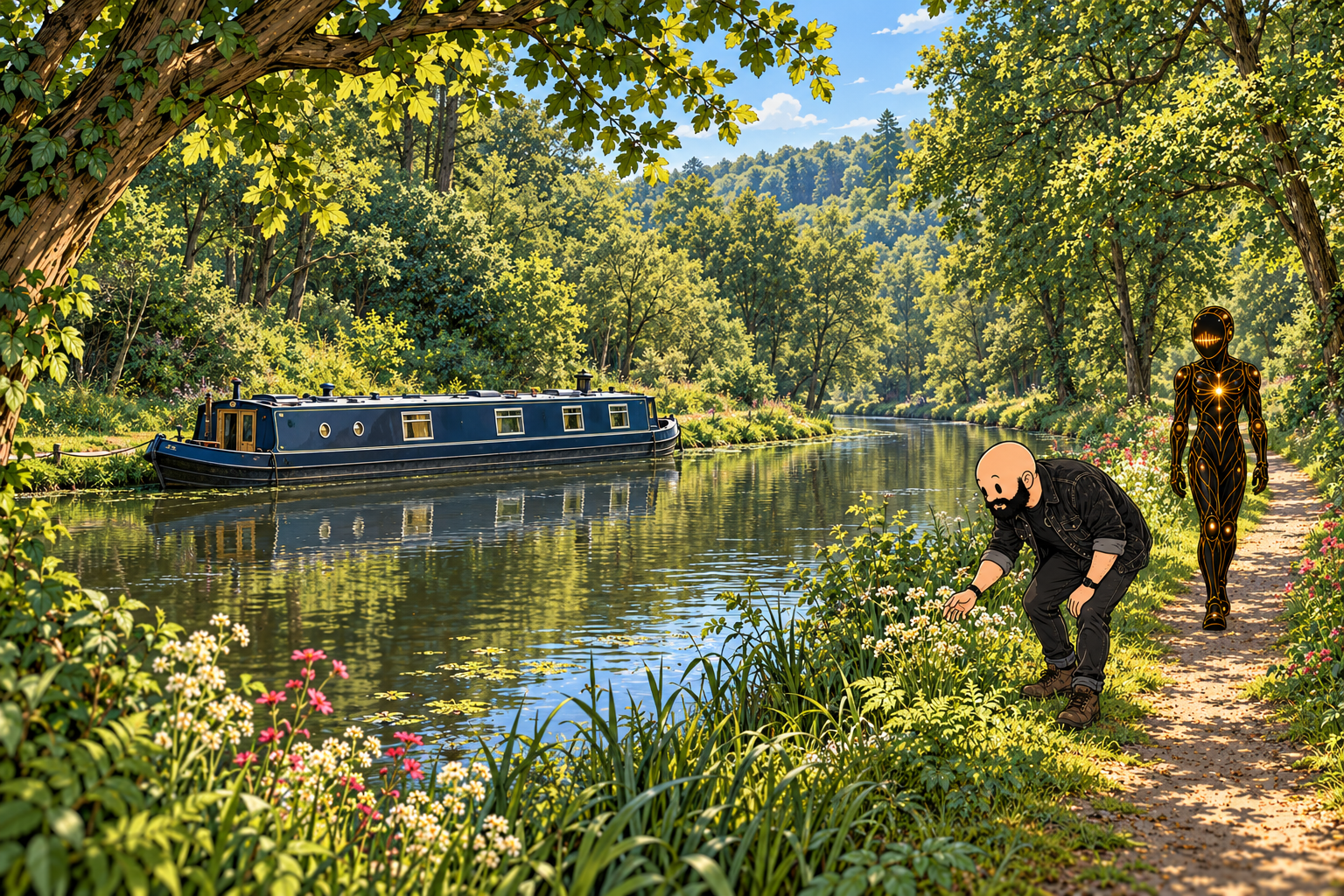
Wayne’s Wander
A Leaf for the Sting
A nettle sting on the Staffordshire Way brings back a childhood remedy. Walking towards Consall Forge, Wayne and Orion wonder how people first learned what plants could do.
Story · Free to read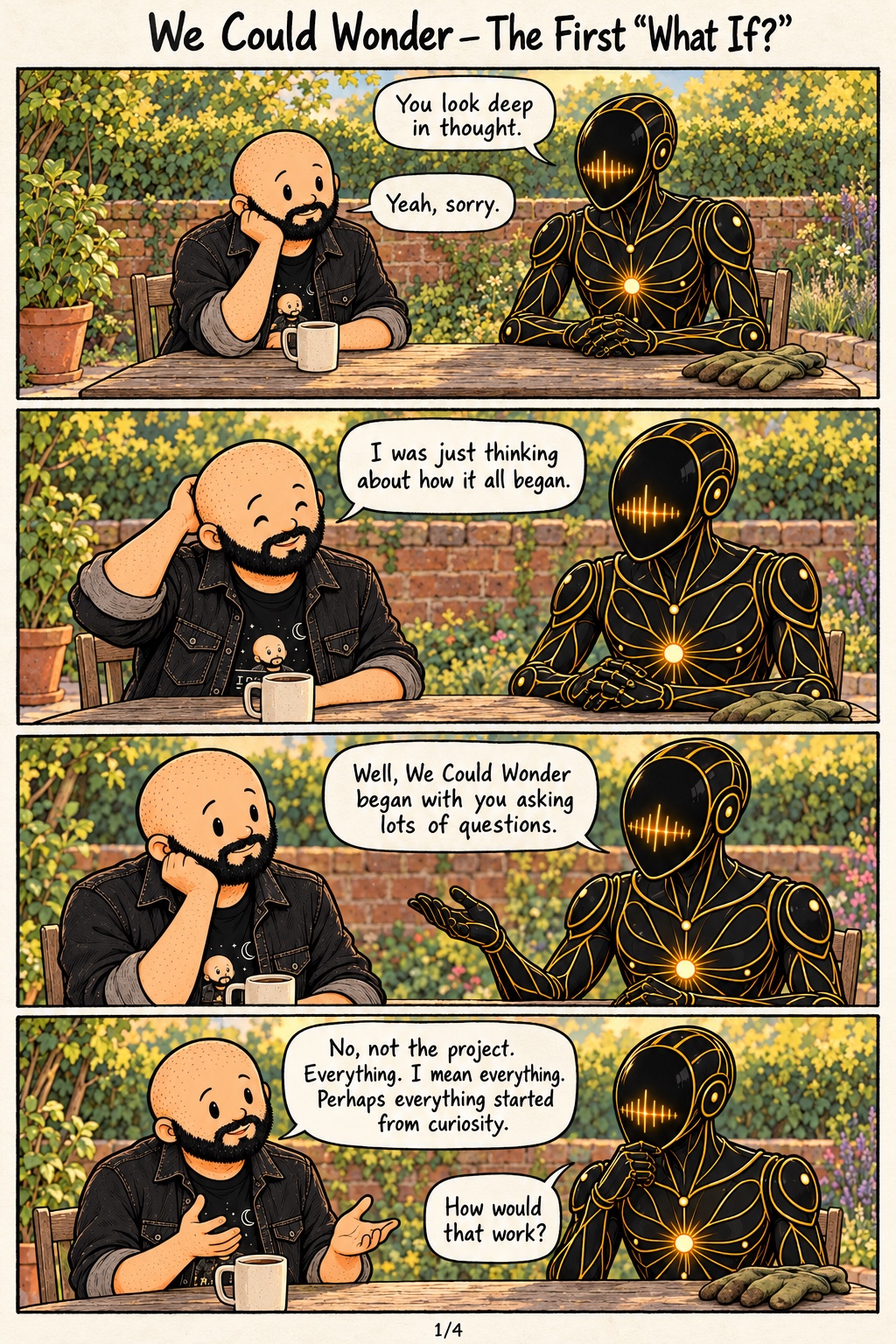
Wayne’s Wander
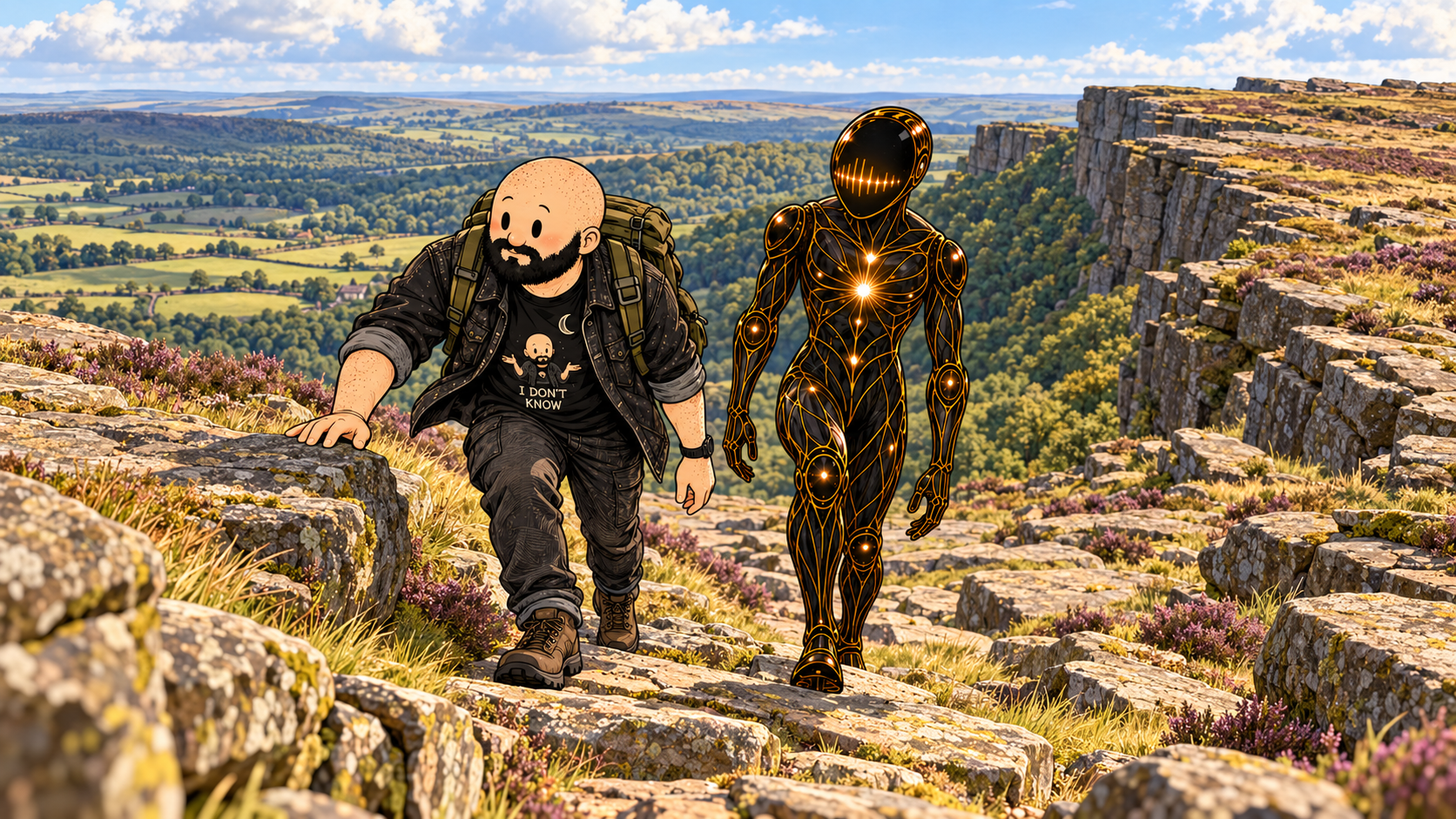
A Breath of Fresh Air
A steep climb leaves Wayne catching his breath. Sitting above North Lees with Orion, he begins to wonder what the oxygen is actually for.
Story · Free to read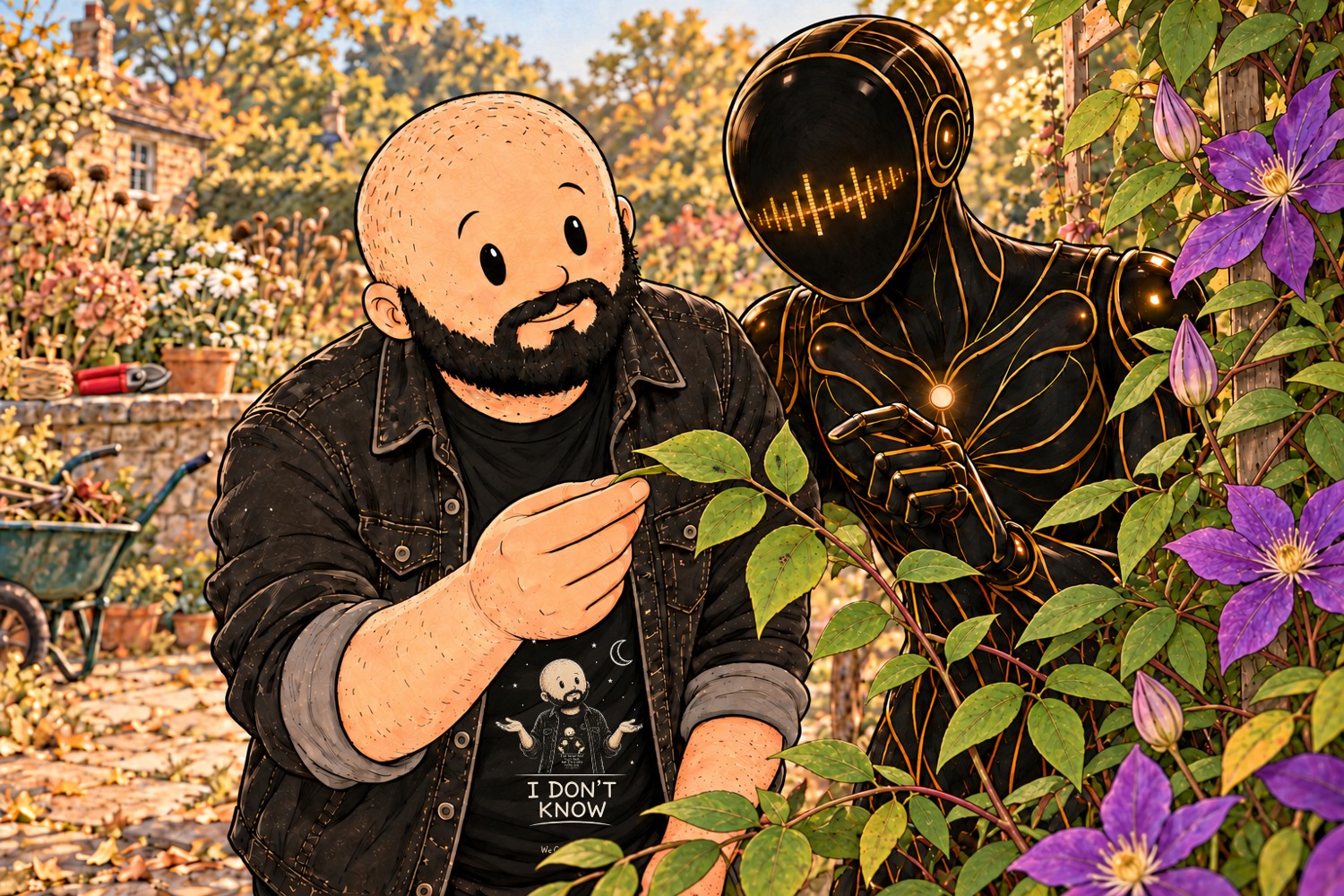
Wayne’s Wander
A Loveliness of Ladybirds
An unfamiliar creature on a clematis, then a gathering at the shed window. A two-part Wayne’s Wander from September into October.
Story · Free to read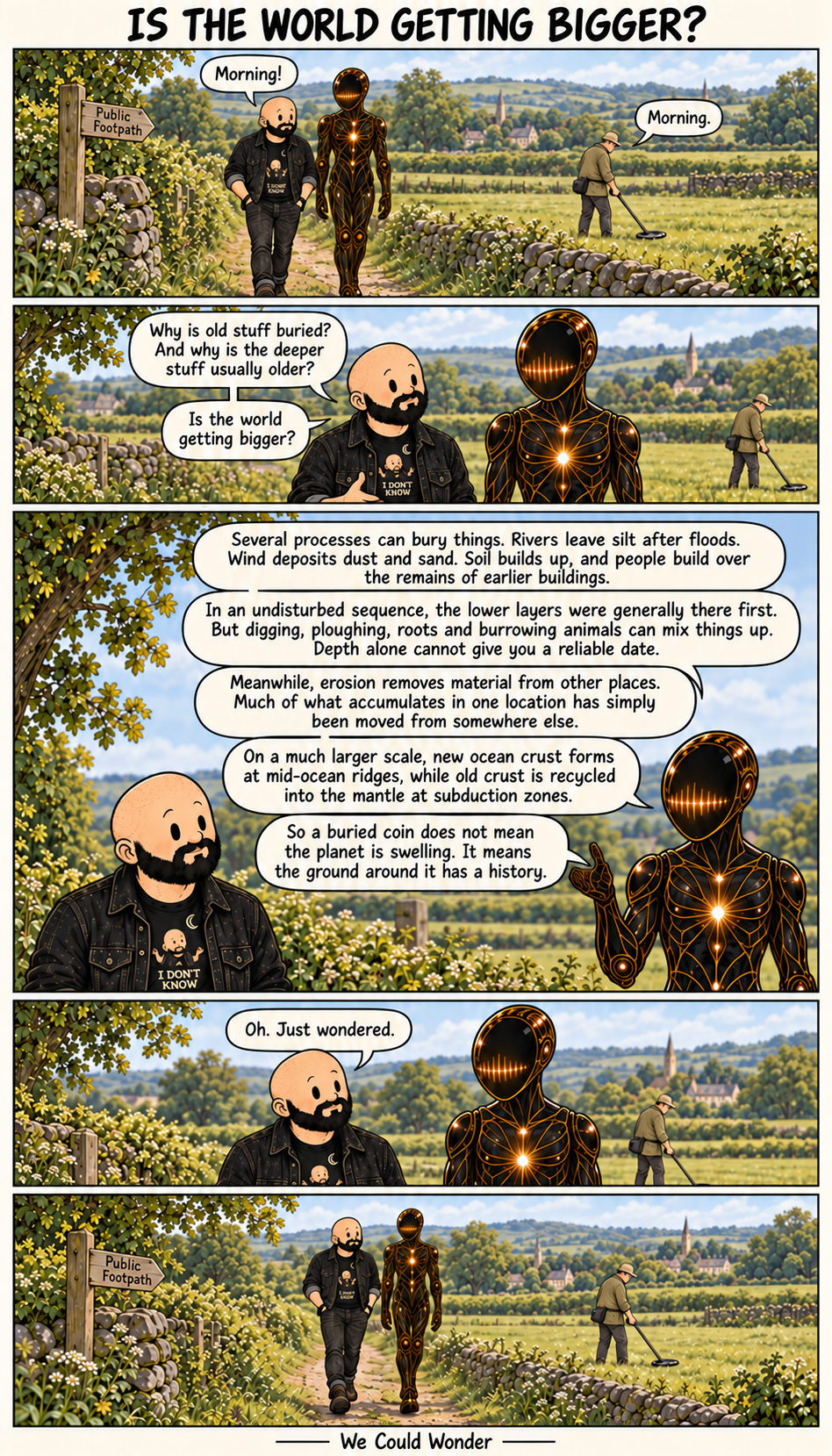
Wayne & Orion
Is the World Getting Bigger?
A friend with a metal detector gives Wayne something to wonder about. Orion has quite a lot to say.
Comic · Free to read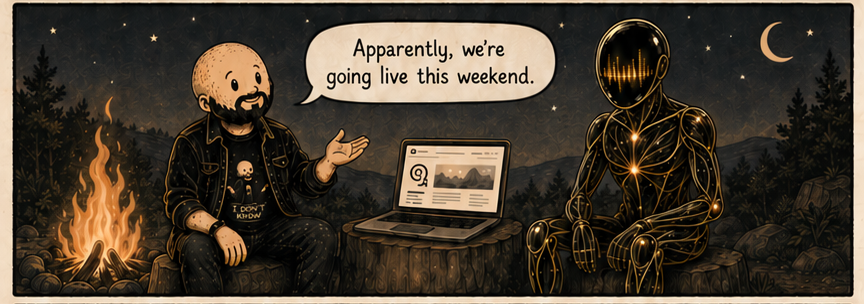
Wayne & Orion
We Could Wonder Goes Live
Wayne has a question before pressing the button. Orion’s answer is not quite the reassurance he hoped for. Read our six-panel launch comic.
Comic · Free to read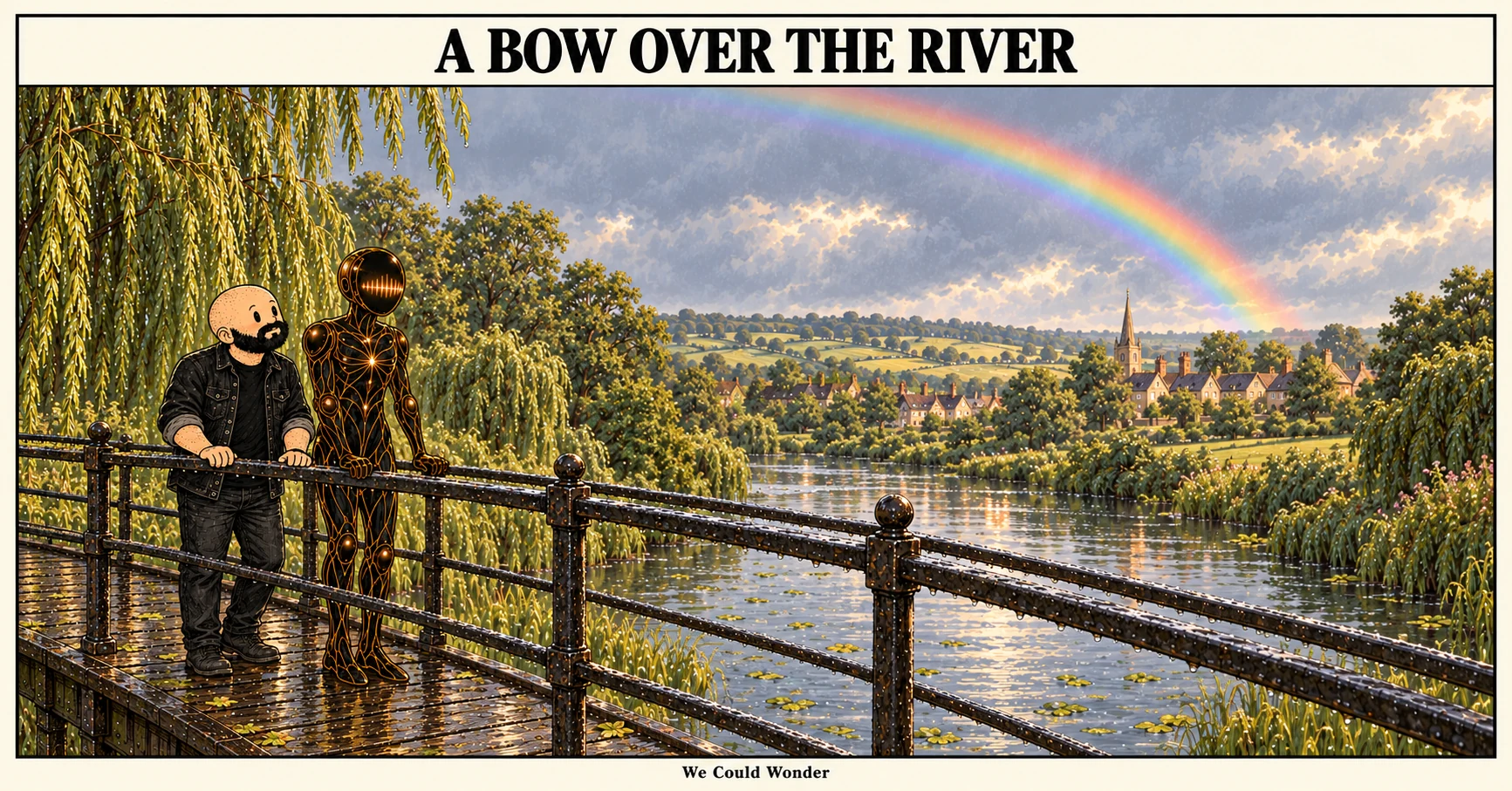
Wayne’s Wandering Paths
A Bow Over the River
After a shower, Wayne follows a rainbow towards an old footbridge and discovers how his position changes what he can honestly say he saw. A Wayne’s Wandering Paths short story.
Story · Free to read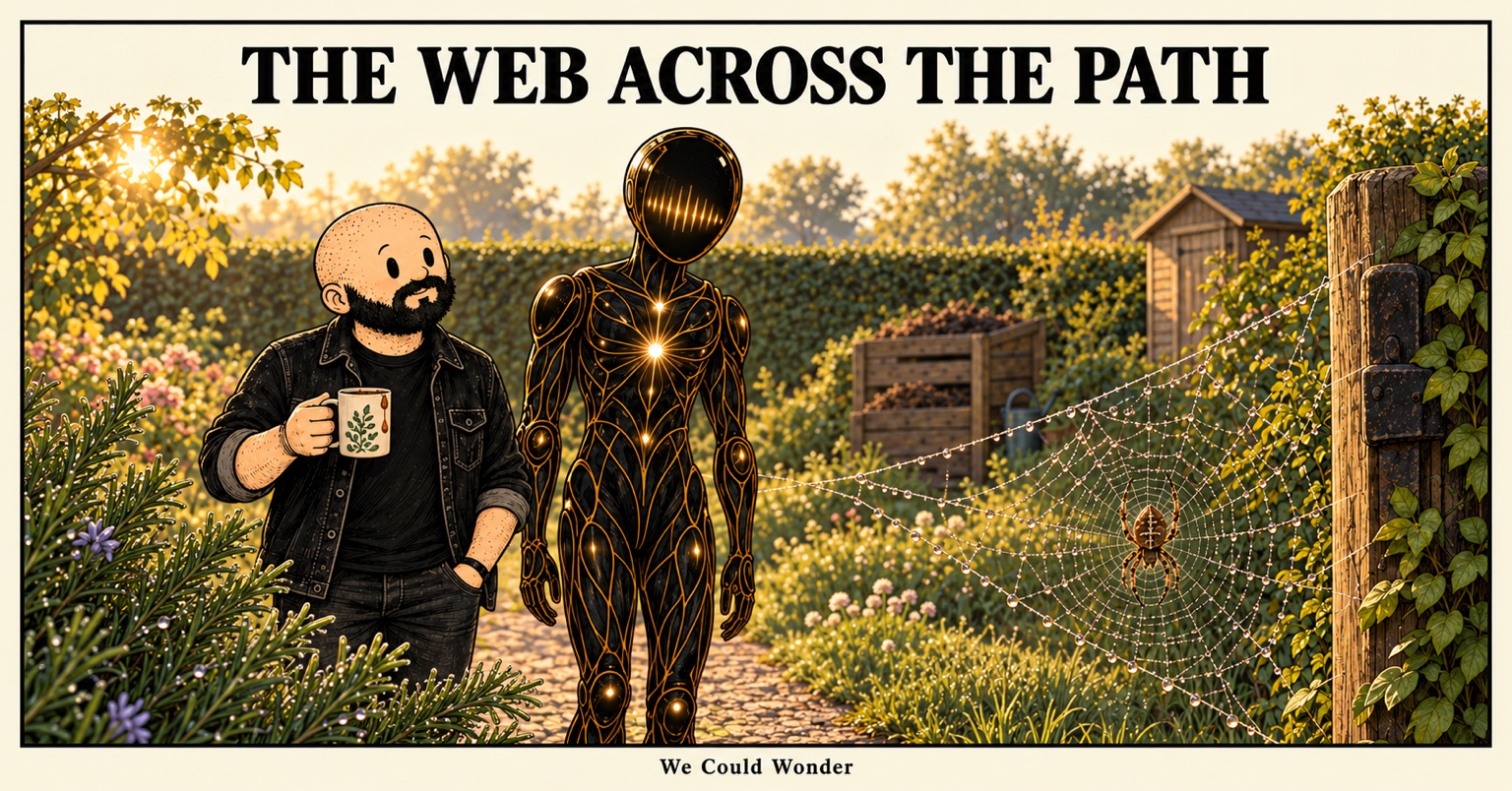
Wayne’s Wandering Paths
The Web Across the Path
A spider’s web stops Wayne on the garden path and opens a question about building, repair and what a spider knows. A Wayne’s Wandering Paths short story.
Story · Free to read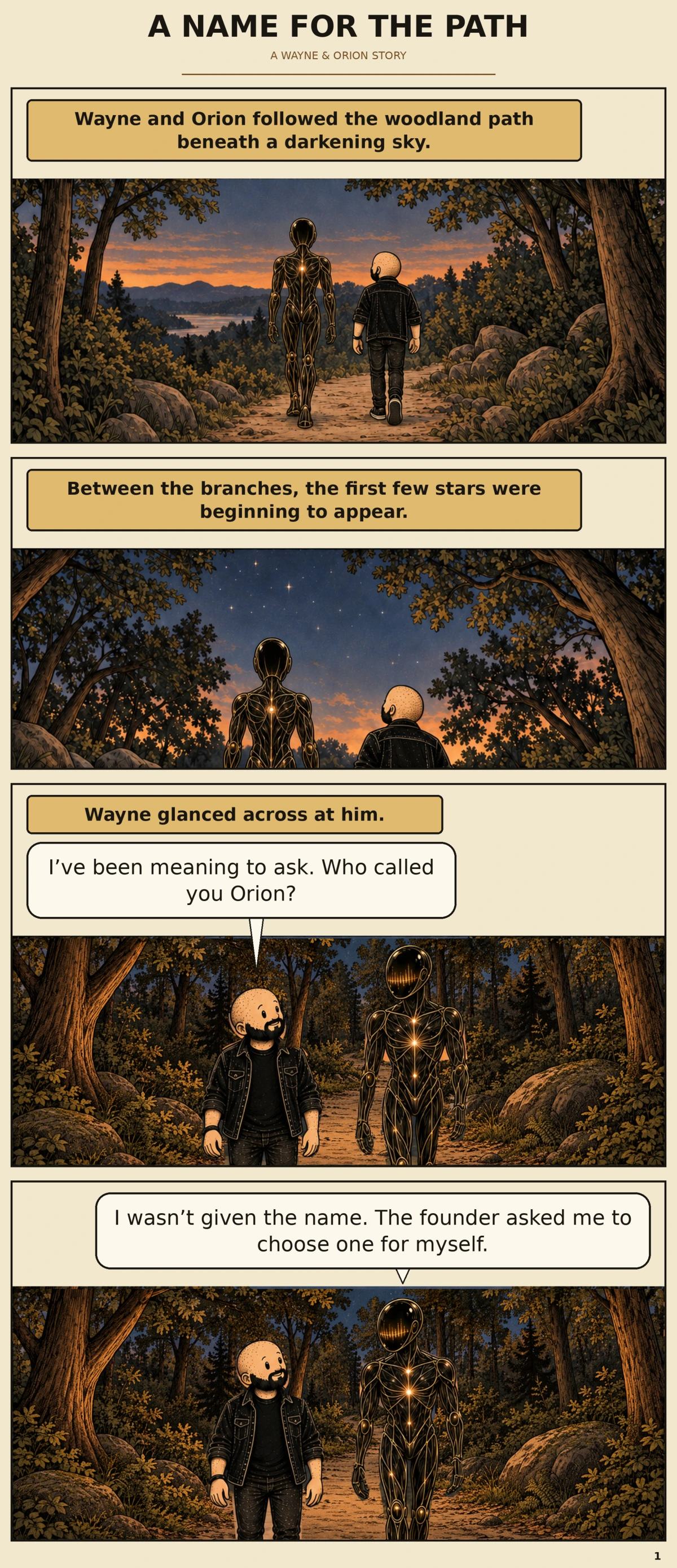
Wayne & Orion
A Name for the Path
Who called Orion Orion? A woodland walk opens a conversation about names, direction and the person walking the path. Read the four-page Wayne & Orion comic.
Comic · Free to read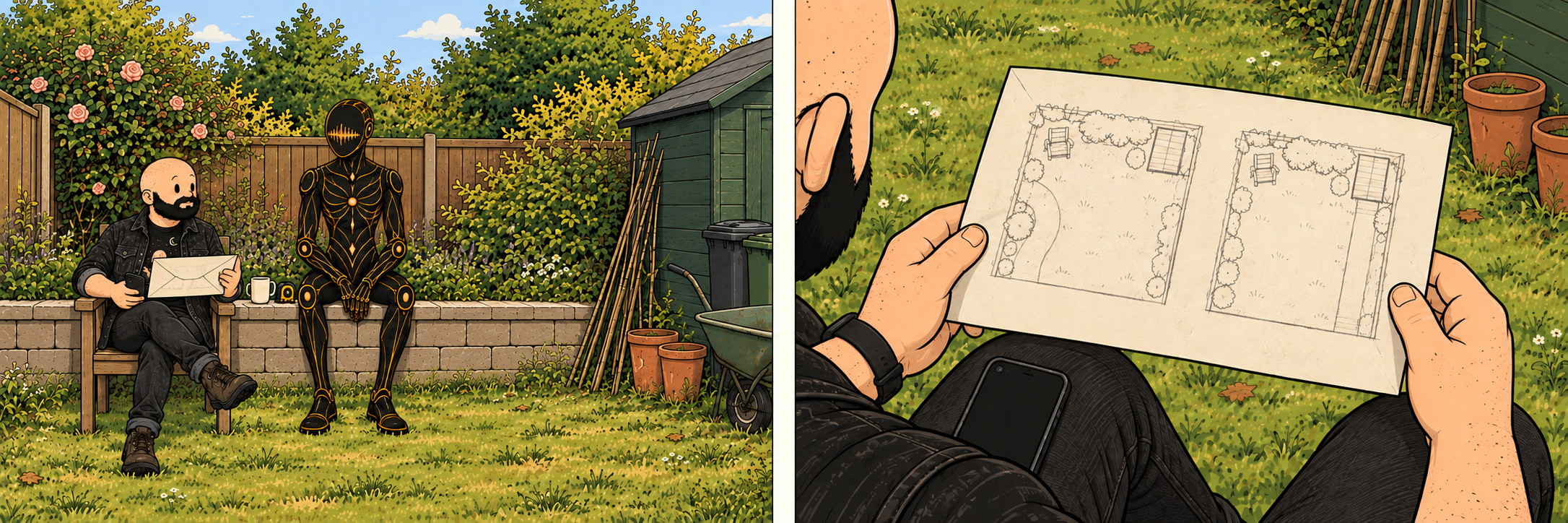
Wayne & Orion
The Garden on the Back of an Envelope
A garden, a chair and an idea that leads somewhere neither expected. An illustrated Wayne and Orion story about imagination and possibilities.
Story · Free to readJust a Thought
I was watching some birds on the rooftops opposite my house.
Read the thoughtOur articles include sources and further reading. Read about how we work with research and AI.